
Introduction
My last Major of the year. Not the last Major article, since we still have the full Area 5 review coming right behind this one, but it was a good way to close out our USPSA season as a whole.
On paper, we are in almost the same place we left off last year, but I do think we made some meaningful gains during the final stretch of the season that give me a much better direction heading into spring.
The biggest takeaway from this year has been learning to keep practicing regardless of how much I am actually able to compete.
I did not shoot nearly as much this summer, but taking a step back and focusing on what I could realistically do here and there to stay involved actually helped me find a better path for my training overall. Instead of feeling like I had to be doing everything all the time, I started getting more value out of the smaller opportunities I did have.
Also, apparently Twista shoots USPSA. We found that out this weekend too.
MATCH FOOTAGE
It was a ton of fun shooting the 2026 Indiana State Sectional. Last year, this same range hosted my first Major and opened my eyes to a completely different level of what this sport could be.
This year was no different, and God bless anyone who shot Indiana as their first Major match. This one was not for the weak when it came to round count. The average stage came out to roughly 35 rounds, with four stages requiring 40 rounds or more.
I personally love my AimCam glasses, and as you have seen, they managed to capture our entire match even when we weren’t shooting with @Devil 6-1. Mixing that footage with relevant third-person cuts really helps show what these stages actually looked and felt like from a competitor’s perspective.
Personally, I felt like I got off to a somewhat slow start, but picking up the pace became much more comfortable once I started getting a handle on my splits.
The biggest thing I can continue working on in my free time is consistent pressure with both hands and making sure that leads to a consistent trigger pull every time. There were several runs throughout the match that felt great until I got to the steel and started giving away time with extra shots.
A couple of those were GREAT runs right up until I decided one piece of steel deserved half a magazine.
INDIANA STATE MATCH REVIEW
Match Format, Staff, & Operations
Indiana Sectionals was hosted again by North Porter County Conservation Club.
If you have not yet branched out beyond the closest Major match to you, one thing you learn pretty quickly is that not all Majors are created equally. For me, Indiana Sectionals is a great example of what a well-run match should feel like.
The stages introduced a good mix of challenges, from distance and engagement patterns to multiple ways to approach and earn points on a stage. Like most Majors, a lot of the staff were competitors themselves. Several of them had also worked the Michigan match, but Indiana felt noticeably more structured from the top down between the Match Director, Range Master, and stage staff.
The round count I mentioned earlier fit the level of difficulty extremely well. Challenging stages did not seem to back squads up, expectations stayed consistent from stage to stage, and any stage issues that did come up were handled quickly.
The range itself is also well equipped to handle the roughly 300 shooters who show up for the match. There were plenty of amenities available throughout the day, and even the little grab bags everyone received at sign-in were a nice touch, especially since everyone seemed to get something different.
Stage Design
The high round count was not just wasted on random walls of targets.
The match did a really good job of creating unique engagements and problems from stage to stage. It was easy to get pulled into the pace you had built on the previous stage because targets might appear at similar distances, but the patterns and opportunities to engage them were constantly changing.
I am also a fan of the endurance side of a Level 2 match. Longer stages and higher round counts do a better job of separating someone who can put together one great run from someone who can consistently perform throughout an entire match.
As a much lower-level competitor, watching the best shooters battle through those longer strings of fire is genuinely rewarding. You get a much better idea of what consistency actually looks like when everyone has to keep producing stage after stage.
The variation in starting positions helped a lot too. Different unloaded starts and setup requirements gave each stage its own identity instead of making the match feel like the same problem repeated ten different ways.
Competitor Highlights
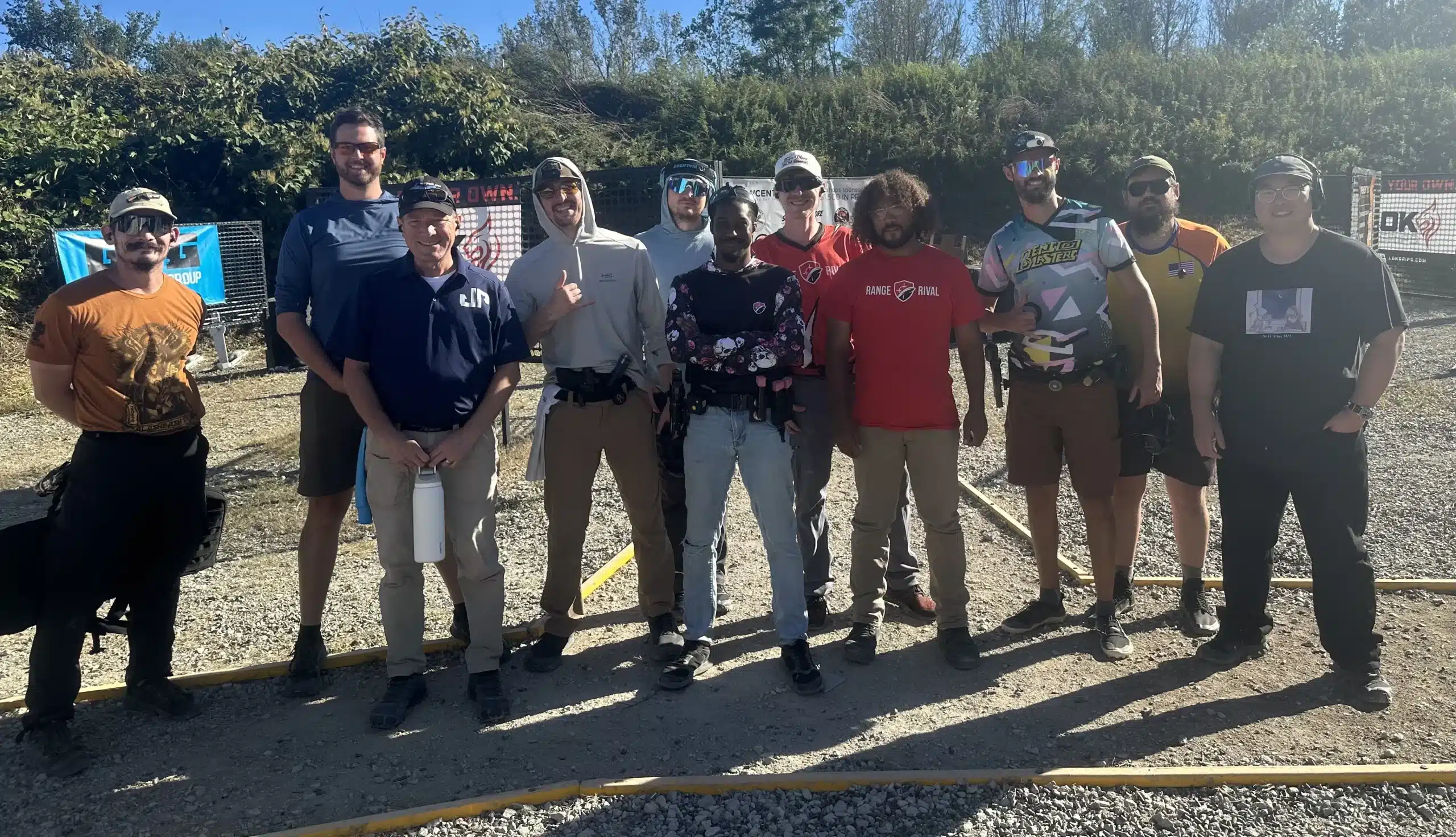
I do not do competitor highlights for every match, but there were a few people on our squad worth mentioning, especially Levi.
Levi Sower
Levi was one of the most genuine people I met at the match. He got into USPSA within the last year and has clearly been having an absolute blast with it.
Unfortunately, with only two stages left in his first Major, he was disqualified following an unintended discharge during a malfunction. His gun had a mechanical issue mid-stage involving the trigger, and during the attempt to get the gun running again, a round discharged unintentionally.
The part that really hurts is that he had a perfectly good backup gun ready to go.
It was a rough way for his first Major to end, but I genuinely hope it does not slow him down at all because he was a great person to have on the squad.
Ben Healey
Ben was an exceptionally good person to shoot with.
I always enjoy squadding with shooters who are clearly better than me because there is a lot you can learn simply by watching how they approach a stage. Even better, you can ask questions directly.
Ben was completely welcoming to all of my B-class questions, including several I have probably asked different people a hundred times already. Having experienced shooters who are willing to explain what they are doing and why makes a huge difference for people still trying to improve.
Doryan Miller
Doryan is obviously already a familiar name here as one of our authors, but he is also one of the main reasons I continue to enjoy showing up, whether it is a weekly local match or one of the Majors we have both been looking forward to all year.
Having someone alongside you who is also developing their skills and working through the same challenges makes the entire process more enjoyable. At the end of the day, you have someone who understands exactly what went right, what went wrong, and how much work went into getting there.
We are also each other’s number one cameramen.
One of the things I appreciate most about Dory is that he does not only look out for the people he came with. Anyone can hand him their phone and ask for a video, but he is also the type of person who notices when somebody does not have anyone recording and asks if they want their run filmed.
That is a small thing, but it says a lot about the kind of competitor he is.
Would I Go Again?
How could I not?
It is my home-state Major and another opportunity to keep developing as a competitor. As I find more time to dedicate to the sport and the community around it, I would love to contribute to the growth of this match from the other side as well by eventually staffing it.
For now, I am happy to keep showing up, learning, and hopefully putting a little more back into the sport each year than I did the year before.