
Introduction
“The secret of change is to focus all your energy not on fighting the old, but on building the new.” – Socrates
That quote feels spot-on for today’s topic. The short and obvious answer is yes, of course spending money to train with an instructor will give you positive results. But here’s the catch: if you’ve already spent a lot of time building bad habits, be prepared to spend even more time breaking them. On the other hand, if you’re still fresh in this hobby or sport, do yourself a huge favor, learn the fundamentals the right way, the first time!
I took my first private session with Joshua Espinosa when I was sitting around a High B rating in USPSA. It blew my mind how many basics I was still missing. Over our two-day session, Josh reminded me again and again: “The best shooters in the world are just doing the fundamentals better than everyone else.”
The key thing to remember as we dive into this is that every session is tailored to your current skill level. You can’t jump into advanced techniques or higher-level thinking until these essentials become second nature:
Shooting as fast as you are capable of
Entering and exiting targets smoothly during transitions
Moving with controlled purpose between shooting positions
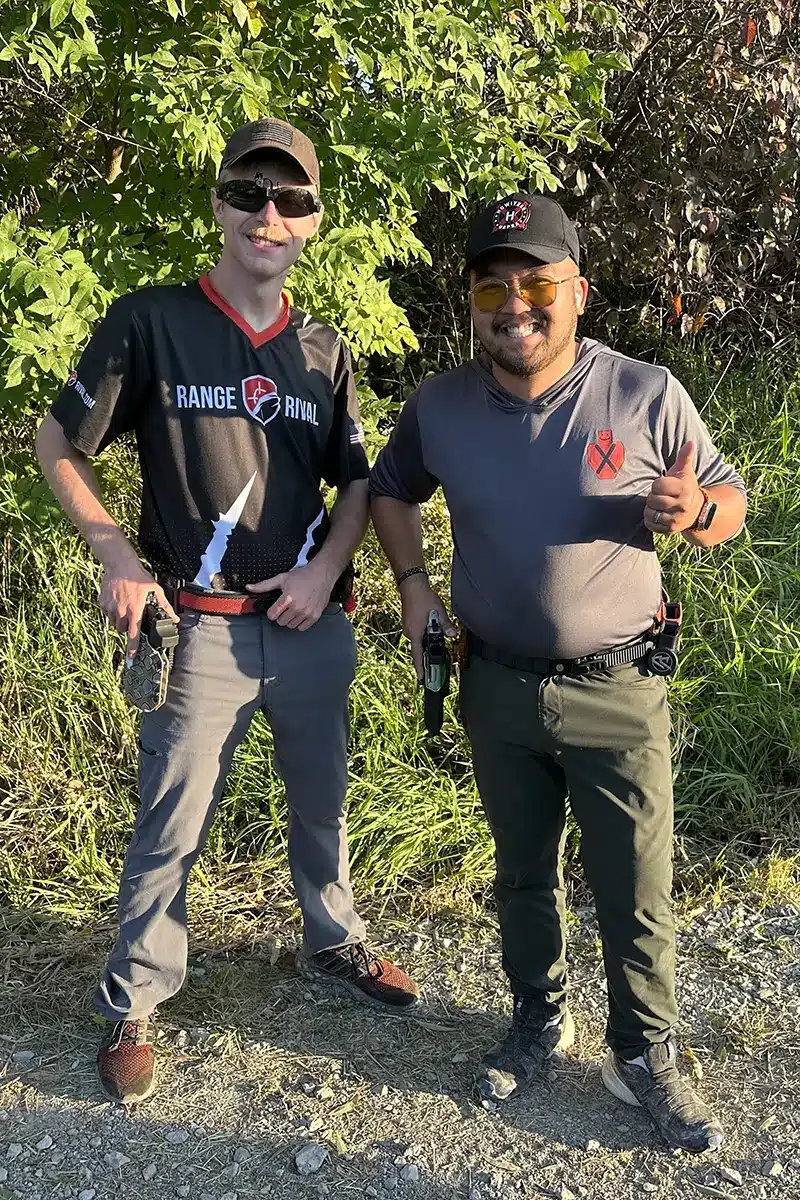

USPSA GRAND MASTER & MI STATE CHAMP
Joshua Espinosa
I’ve been shooting guns for about 5 years now and competing for 4 of those years. Growing up in the Philippines guns were never really a thing I was involved in due to the fact is very hard to own one there from the monetary stand point. I am a first generation gun guy in my family. I picked up my first gun a month before covid hit and I’ve been involved in it ever since.
I started competing because a buddy of mine dragged my behind to an indoor match and I’ve been hooked ever since. I continue to compete because I want to be better than everyone I compete against and having that attitude plus an underdog mindset just drives me to be 1% better everyday.
Training Session #1
Shooting As Fast As You Can
The title here can be a little misleading. “Shooting as fast as you can” is not about how quickly you can pull the trigger; it is about how quickly you can deliver accurate shots on a small target. If you cannot, the goal is to figure out what is preventing you from running tighter, faster splits in the same scoring zone.
We started with single trigger pulls while already aiming downrange. In dry fire, the focus was on being honest with yourself about whether the dot moved as the trigger broke. The priority was not just accuracy but also responding correctly to the timer. One of the biggest takeaways was that the timer is not a signal to begin your process. It is permission to execute what you have already committed to before the beep.
Entering/Exiting Target Transitions
The next skill was learning how to enter and exit targets smoothly with your sights. It is easy to get stuck on a target, over-confirming hits, or to swing too aggressively into the next one. This exercise built on the same principles as the “shooting as fast as you can” drill: your decisions are already made in your stage plan. All you are doing is waiting for the next cue.
For example, the final shot on Target 1 should immediately release you into Target 2. As soon as the trigger breaks, your eyes should move ahead of the gun, finding a small spot on the next target. A stable grip and consistent trigger pull allow you to trust where your dot was when the shot broke without hunting for holes in the paper.
Ideally, you should apply most of your speed and force at the beginning of the transition, then slow slightly as you arrive on the new target. Josh explained this as the “90/10 rule.” Push hard for the first 90 percent of the motion, then stabilize for the last 10 percent. This prevents overshooting the target and ensures your first shot lands exactly where you want it.
Movement Between Shooting Positions
In many ways, moving between shooting positions follows the same 90/10 principle. Push with maximum energy for most of the movement, then control and stabilize as you enter the final portion. Again, the idea is that your stage plan provides all the cues you need. Those cues are not for making decisions but for releasing you into the next action. Shooters often lose valuable time not from missed shots but from inefficient entries and exits.
One of the first adjustments Josh pointed out was my stance. During the “shooting as fast as you can” drill, I was standing too narrow and stretched out. By dropping my dominant foot slightly and lowering my stance, I gained more stability while shooting and positioned myself to explode more efficiently into the next position.
Another issue was weight distribution. I was often loading weight into the same leg I needed to lead with when leaving a position. This forced me to shift to the opposite leg before moving or to drag my outside foot inward, both of which wasted crucial seconds. Small changes to stance and weight management made a noticeable difference in speed and efficiency.
Key Takeaways
I came in expecting to be torn apart on a fundamental level, but I was pleasantly surprised to discover that high-level shooting is really just about doing the basics better. That realization lifted a weight off my shoulders. Instead of worrying about what I was “missing” as my progress slowed, I learned that what I truly needed was to reexamine and refine the skills I already had. Shooting fast is not simply about pulling the trigger quickly; it is about recognizing and acting on cues in real time. It is about layering small habits until they connect seamlessly, creating one continuous flow from action to action.
Should You Hire a Private Trainer?
Absolutely. Whether you are a casual range visitor or a dedicated competition shooter, private lessons are one of the most valuable investments you can make in your progression. It is far easier to learn a skill correctly the first time than it is to overwrite a bad habit later.
Worried about the cost? You shouldn’t be. Even as a casual shooter, you likely spend far more on ammunition and maintenance just sending rounds downrange without clear direction. While it is possible to improve on your own, starting early with private instruction amplifies the value of every future training session you do by yourself.
Finally, consider what you gain from hands-on coaching compared to reading articles or watching videos. You get the eyes of an experienced trainer on your shooting specifically. Everyone struggles with different aspects of the fundamentals, and having someone identify and explain what you cannot see for yourself builds confidence and ensures that the time you spend training afterward is truly productive. More importantly, having someone who can help you learn how to identify and workshop issues, will open shortcuts to your training.
From Practice to Match Performance
We are going to do a bit of time traveling here for a second. I’ve attached two videos, one showing a match just prior to my class with Josh. While this includes 50% rifle footage, I’ll add that nearly everything Josh conceptually applied to shooting and moving with a handgun, applies to shooting a rifle on the move.
The key differences I both see in the video and feel when I am on the firing line is that I am no longer holding to make sure I’ve confirmed hits. I’m dragging my eyes and gun together from target to target less, more committing to looking ahead as soon as I’ve decided to pull the trigger. Entering and Exiting positions more effectively has been a massive game changer for my time and confidence when engaging targets. My firearm is remaining up more often as I try to not waste precious seconds in attempts to gain a fraction of one.